Strategic Planning for Construction: A Framework the Field Actually Uses

Most construction companies have a strategic plan somewhere, usually a document built once a year during a slow week and rarely opened again after the kickoff meeting. The problem isn't the planning itself. It's that the plan gets treated as a deliverable instead of a working tool the office and the field actually reference. For firms competing on tighter margins, longer backlogs, and a labor market that punishes bad staffing bets, strategic planning has to connect directly to bid decisions, hiring, and capital allocation, or it stays a binder nobody opens again until next year.
Start With Capacity, Not Ambition
A lot of strategic plans open with growth targets before anyone has checked whether the company has the superintendents, PMs, or bonding capacity to support them. That order should flip. The first real question is how much work the current team can run well at once, including the buffer needed when a job slips or a key hire leaves. Once that ceiling is honest, revenue goals and pursuit strategy can be built against it. A plan grounded in real capacity is one estimators and operations leads will actually follow, because it matches what they already know from running jobs.
Tie the Plan to the Pipeline
Strategic plans and the project pipeline often live in separate documents, reviewed on separate schedules, by separate people. That gap is where good intentions quietly die. The plan should specify which project types and client relationships the company is actually pursuing this year, and the pipeline review should check against that list on a regular cadence. If the backlog drifts toward work the strategic plan said to avoid, that's a signal worth discussing at the leadership level, not something to notice after the contracts are signed.
Make Risk Part of the Plan, Not an Afterthought
Risk registers tend to live at the project level, built after a contract is awarded. Strategic planning is where company-level risk belongs: concentration in one market or client, exposure to a subcontractor base that's thinning out, or a dependency on two or three key people who could leave. None of these show up on a single job's risk log, but they shape whether the company can absorb a bad year. A strategic plan that names these risks in plain terms, with an owner and a review date attached, does more for resilience than another page of growth projections.
Build in Quarterly Checkpoints
An annual plan reviewed annually is really just a prediction, not a plan. Construction conditions change fast enough, material costs, labor availability, interest rates, that a plan set in January can be out of date by summer. Quarterly checkpoints don't need to be long meetings. They need to answer three things: what changed in the market, what changed in the backlog, and whether the plan's assumptions still hold. When they don't, the plan gets adjusted in that quarter rather than defended until year end.
Get the Field Involved Early
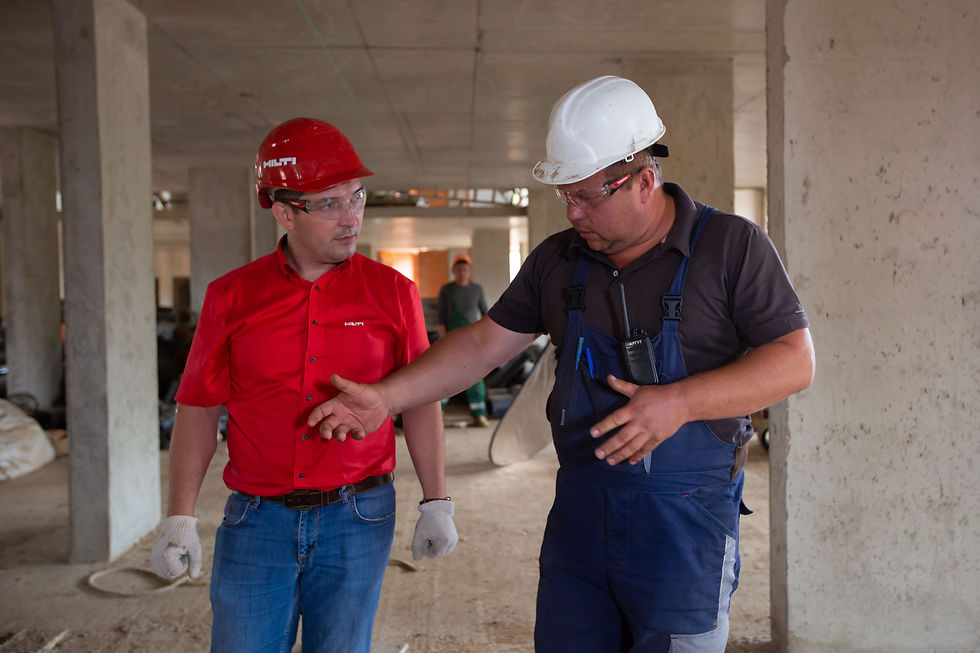
Strategic plans built entirely in the front office tend to miss the operational reality that superintendents and foremen see every day. Involving field leadership early, even briefly, surfaces constraints that change the plan for the better: a scheduling assumption that doesn't hold on real sites, a subcontractor relationship that's more fragile than it looks from the office, a piece of equipment nobody accounted for replacing. It also makes the plan easier to execute later, since the people running the work had a hand in shaping it.
The Bottom Line
Strategic planning in construction works when it's built from the ground up: real capacity, an honest pipeline, named risks, and regular check-ins rather than a yearly reset. None of that requires a longer document. It requires a shorter one that gets used, argued over in quarterly meetings, and adjusted when the market or the backlog says it should be. That's the difference between a plan that sits in a drawer and one that actually shapes the decisions a construction company makes.
The PRESWERX Team